Sébastien Fichot

I've been building software since 2001

I'm AI Engineering Lead at Volaris Group, for the portfolio companies in Europe, and the point of contact for the ones in France. I live in Aix-en-Provence.

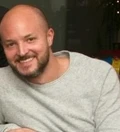
Portrait of Sébastien Fichot

It started with a computer I wasn't allowed to touch

My father brought a computer home for one purpose: filing his taxes. I was told to keep my hands off it.

I took it apart anyway, like a box of Lego. My father was furious, so I put it back together in a hurry. It booted on the first try.

For a while I wanted something else. I grew up near Meaux, where rowing is a big sport, and I dreamed of rowing professionally. When I gave that up I came back to computers. It was the time of MSN Messenger, first hacks and CD burners.

Rowing left me one rule, which I found again in martial arts: you can't compete with someone who is having fun.

Volaris Group

AI Engineering Lead, portfolio companies in Europe. Point of contact for the companies in France.

Volaris Group holds a portfolio of software businesses. My job is to speed up how they adopt AI. I work with their R&D leaders and their engineering teams, inside each company's own stack and constraints.

The work follows software through its whole life: how code gets written with AI, where agents fit, code review, automated testing. It also covers the rules around it, such as governance, guardrails and security. There is no central AI product behind this. Each company takes up the practices in its own way, and I get hands-on where that gets things moving.

Software engineering is where it starts. Our team's remit reaches further, to putting AI to work in every department of these companies.

How I go about it

I find the bottleneck first. Where it sits decides where AI goes in that company.

Inside one company I push for one standard way of working. Leaving everyone to explore alone leads to fragmentation, cost, frustration and results nobody can verify. Across the portfolio I expect no single standard, because the companies don't have the same needs.

Business value is a chain. Raise the throughput of one stage and the bottleneck moves to the next one. So product teams are in from day one.

Then I measure which stage holds the bottleneck, deploy, and measure again.

One of the tools I pass to these companies is Agentic Architectures.

Seedtag

Staff Engineer, 3 years

Seedtag is an AdTech company. I worked on its Connected TV infrastructure, and I was about 70% hands-on, which is the part of the job I'd defend hardest.

Show contextualization went from a blank page to 900M+ daily bid requests. I conceived it, built it and scaled it. It was real time by construction: a bid request is answered inside the auction window or it is not answered at all.

I owned the evaluation of AI developer tooling, and we standardised on it. Teams went from basic tool usage to parallel autonomous agents running across separate projects and worktrees, with fewer defects behind each delivery and more time spent on design.

A factory for software

I built an AI Software Factory: an event-driven, semi-autonomous agent pipeline that turned user interviews and product specs into validated code deployments, backed by dynamic knowledge graphs.

One day a pull request reworked our Kafka processing queues. People had reviewed it and approved it for production, on local tests that turned out to be too small. Merging required an end-to-end run of several hours, orchestrated by an AI that was free to add tests depending on what was being shipped.

It used that freedom. It found a bottleneck that only appeared past several million items processed in a row, blocked the deployment, and opened a new pull request with a fix.

Pipelines that repair themselves

I also built fully autonomous pipelines that detect their own failures and repair themselves. They kept a worldwide corpus of millions of CTV shows current with nobody standing by.

One application chose which models our production code ran on. One day a preview model was listed as available, but it wasn't available in the region where our code ran. The application saw the error, wrote a script to probe availability in every region, and pushed a pull request with the regional exceptions.

Then it opened a ticket describing what it had done, and a second one scheduled a week later to check whether the rule was still needed.

Revenue impact on every pull request

I built the CI check that made revenue impact visible per pull request: statistically validated, and segmented across browser, device, operating system, source type, ad unit and publisher. The team took it over.

That job is behind me now.

Telaqua

Tech Lead, September 2022 to September 2023
Lead Dev Full Stack, March 2022 to December 2022
Senior Dev Full Stack, January 2021 to March 2022
Marseille

An IoT company. I started by mentoring engineers, reviewing code and delivering critical projects end to end. I fully automated our CI/CD.

As lead I wrote RFCs and prototypes and became the person people brought the hard problems to. As Tech Lead I set the technical vision and reviewed technical designs, mostly on my own.

The stack: React, Expo for iOS and Android, Node.js, NestJS, GraphQL, event sourcing, DDD, RabbitMQ, MQTT and Kubernetes, on top of several IoT network platforms.

Gatsby

Open source contributor, March 2017 to August 2021

I was a very active contributor to Gatsby: 35 pull requests merged into gatsbyjs/gatsby. I worked on the GraphQL API generator, the AST, image optimization, SEO, and content plugins such as WordPress and Contentful.

The largest job that came out of it: BCG's West Coast design organisation was running roughly 100 websites on WordPress, expensive to operate and hard for their own designers to update. I assembled and led the freelance team that rebuilt the estate, and chose Gatsby as the headless CMS front end.

Later we connected that whole estate to the Sho.AI brand system. It became our large-scale demonstrator for winning new clients.

EXOPUP

Chief Technical Advisor, January 2021 to May 2021, La Ciotat
Tech Lead and co-founder, March 2020 to January 2021, Marseille

I set the technical direction for an application aimed at industry leaders such as Thales and Airbus. I used Domain-Driven Design and NestJS to build an application with over a hundred use cases. It ran on Redis and Kubernetes, and could be deployed as SaaS or on-premises.

MyCTOFriend

Senior Dev Full Stack, April 2020 to October 2020, Marseille

Microservices with Node.js and serverless, Strapi as a payment provider, and a lot of automation.

Sho.AI

Chief Technical Advisor, February 2020 to October 2020
Tech Lead, early-stage CTO and co-founder, March 2017 to February 2020

It began with a friend who worked in design. I saw an opening where AI met branding: let anyone create a brand identity, then generate, evolve and distribute everything that follows from it. Website, blog, apps, ads, even print.

I coded the working prototype in three months on AWS serverless. At the start I was the only engineer and the founding technical partner.

Design systems from plain words, in 2017

The prototypes generated complete design systems in minutes from what a user said about their brand. You asked for "family-friendly" and "environmentally conscious", and the system produced a design that reflected it. This was before generative design tooling existed as a category, which made it an odd thing to be doing at the time.

I also prototyped a "Brand Token", which used a blockchain to represent each version of a branding, and a "Brand Score", a single indicator of how consistent a brand's designs are across all media.

The mistake that cost a month

Early on I set up an identity structure on AWS without seeing how it would constrain us later. When the prototype got traction, it forced a separate billing identity per client, and the admin work buried us fast.

I spent a full month rewriting the architecture to run on EC2. That was a big mistake. Since then I treat identity and tenancy as architecture decisions.

The team

I recruited developers and handed them whole areas as working prototypes: digital asset management, brand audit, asset generation, authentication, CMS, website generation, content indexing, infrastructure. We then hired more engineers, including a CTO. The company grew to seven people in sales and five engineers.

I taught one of my co-founders software development from scratch. He is a senior engineer and a founder in his own right today.

I worked from several places in the US, Chicago among them, then moved back to France.

FeetSight

Co-founder, November 2013 to April 2017, Paris and Nantes

We took a Wii Balance Board, a force platform sold for a games console, and turned it into a reproducible, deterministic measurement instrument. I built the measurement stack.

We collected data over two years from several hundred people in Paris and Nantes, in collaboration with University College London. A refined version of the system was later used to assess elderly people and children with disabilities.

The company licensed footwear designed around posturology and behavioural profiling. It ran alongside my full-time engineering work.

Freelance

Tech Lead and Lead Dev Full Stack, May 2015 to March 2017, Paris

Full-stack work for clients such as BCG, Sage and Eurosport. These are the years I moved from Microsoft .NET to JavaScript: Node.js, NestJS, GraphQL, server-side rendering, React and Gatsby.

The most useful thing I ever built was never a company. Jobs kept arriving that were too big for one person. I won the work, split it up, handed the parts to other freelancers and taught them what they hadn't done before. I kept the project management, the client relationship and the budget.

That came to about a dozen engagements and probably around thirty freelancers. It's the closest thing to a Staff role I had before the title existed.

A3IS, Groupe BLUE SOFT

Senior Dev Full Stack .NET C#, September 2010 to May 2015, Paris

An IT services company. I worked on projects for critical accounts such as Hybris, Le Figaro, SeLoger.com, Vente-Privee.com and BPCE, in .NET, ASP.NET, C#, Windows Mobile and MS-SQL.

LNA, a photography studio

Co-founder, Paris, four years, closed in 2012

400 square metres, all natural light. I handled administration and public relations, and worked as a set assistant.

Freelance

Dev Full Stack .NET C#, May 2003 to September 2010, Paris

Mostly front-end and API development for e-commerce projects. Also large datasets, feasibility analysis from detailed functional specifications, and research projects to find funding or a creative way to build something. Postgres, MS-SQL or Oracle, whichever the project had.

Aricie

Junior Dev Full Stack .NET C#, January 2001 to January 2003, Paris

My apprenticeship, at a software solutions integrator. I learned the Microsoft stack of the time, .NET, ASP.NET, C#, Windows Mobile and MS-SQL, next to experienced developers.

What I hold on to

Computing should serve people, never the reverse. I take up a technology when it helps people go faster and further in what they set out to do. That is what draws me to AI.

What sets us apart from AI is the pleasure we take in living.

And I'm really interested in what people tell me. I listen, I find the problem, I solve it.

Write to me if you want to talk about any of this.